All-on-6 Dental Implants in Turkey: Cost, Stages, All-on-4 Comparison and Safety
Medically reviewed by Dr. Furkan Küçük · Last reviewed:
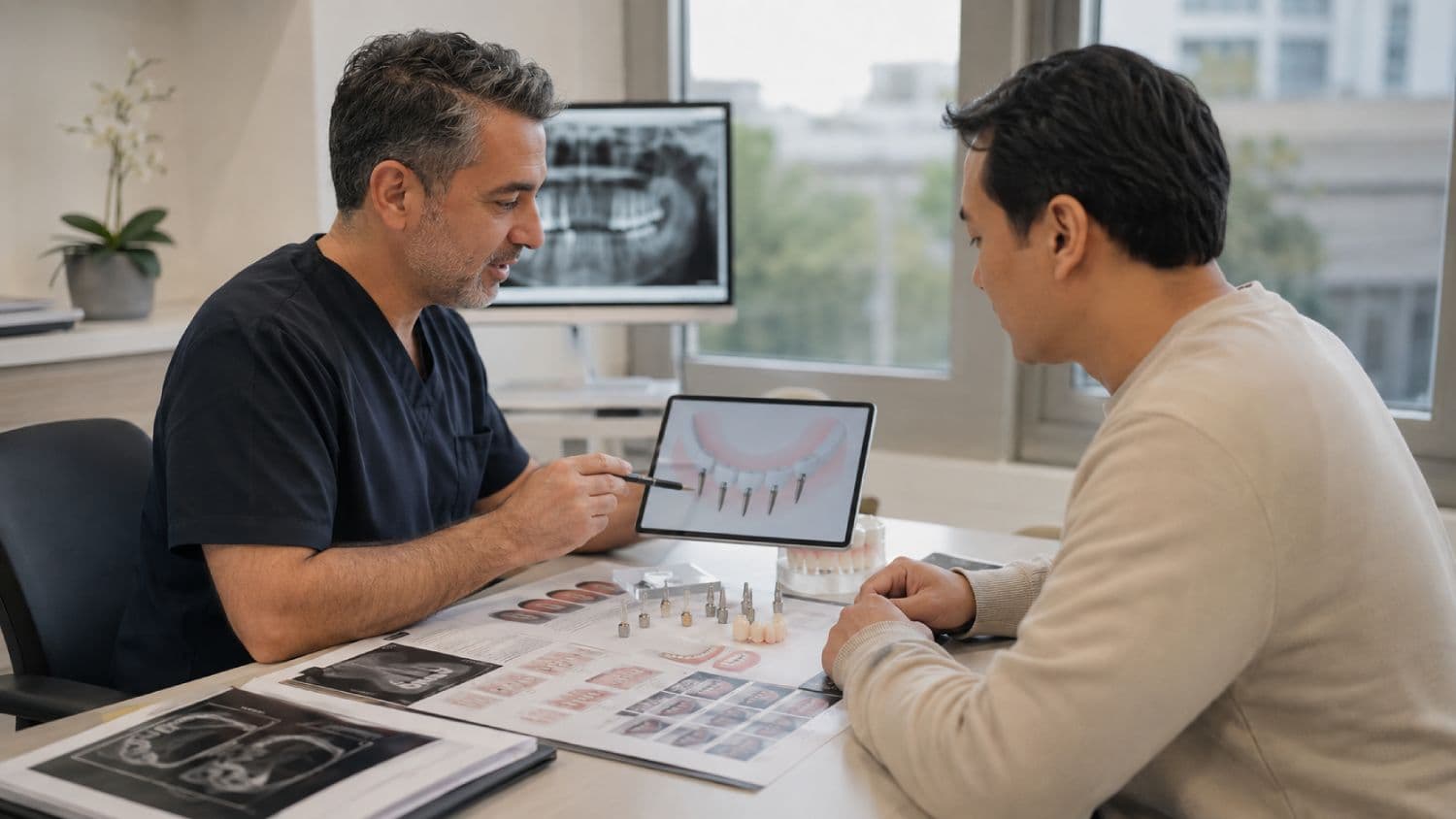
All-on-6 Dental Implants in Turkey: Cost, Stages, All-on-4 Comparison and Safety
All-on-6 dental implants can be used to restore a complete upper or lower arch with a fixed implant-supported bridge. The important point is that “six” is not automatically better than “four.” The number and position of implants should follow the final prosthetic design, available bone, bite, hygiene access, anatomy, and the consequences of a future complication.
For international patients considering treatment in Turkey, the safest way to compare plans is to separate the implant-fixture price from the total treatment cost, understand why six implants have been recommended, and confirm in writing the temporary teeth, final bridge, healing stages, aftercare, and remedial responsibilities. Medical-tourism guidance also emphasizes understanding what is included and arranging follow-up and continuity of care.
Exact All-on-6 Implant Fixture Prices at Dr. Furkan Küçük Dental Clinic
At Dr. Furkan Küçük Dental Clinic in Istanbul, the current controlled base price for one dental implant fixture is:
- Turkish implant system: 225 euros per fixture
- German implant system: 300 euros per fixture
- Swiss implant system: 500 euros per fixture
Because an All-on-6 plan uses six implant fixtures for one jaw, the fixture-only subtotal is:
- Turkish implant system: 1,350 euros for six fixtures
- German implant system: 1,800 euros for six fixtures
- Swiss implant system: 3,000 euros for six fixtures
If both the upper and lower jaws are treated with six fixtures each, the fixture-only subtotal for twelve implants is:
- Turkish implant system: 2,700 euros for twelve fixtures
- German implant system: 3,600 euros for twelve fixtures
- Swiss implant system: 6,000 euros for twelve fixtures
These are implant-fixture subtotals, not complete All-on-6 treatment prices. A complete quotation may also need to include abutments, fixation components, extractions, imaging, surgical guides, temporary teeth, the final bridge, laboratory work, bone grafting or sinus treatment when required, medication, follow-up and other services. The FDA likewise distinguishes the implant body, abutment and other restorative components of an implant system.
Prices shown are base prices before discounts and special offers. Final pricing depends on the individual treatment plan. Contact the clinic for current discounts and personalized offers, and review the clinic's current offers.
If accommodation is arranged through the clinic’s partner option, the controlled base hotel price is 55 euros per night. Hotel, transfers, and other travel services should be treated as included only when they are specifically listed in the written quotation.
What Does All-on-6 Actually Mean?
“All-on-6” generally describes a fixed full-arch restoration supported by six dental implants in one jaw. The implants are the foundations inside the jawbone; they are not the visible teeth.
A full treatment normally involves several separate parts:
- Implant fixtures: the components placed in the jawbone.
- Abutments and fixation components: the connectors that connect the implants to the prosthesis.
- A temporary prosthesis: fixed or removable depending on the case and the loading plan.
- A final full-arch bridge: designed after healing and restorative assessment.
- Maintenance: professional reviews and daily cleaning around and beneath the bridge.
Implant systems consist of separate implant and abutment components, while the attached artificial teeth constitute the restorative component of the treatment.
This distinction matters when comparing prices. An advertisement listing the cost of six implants may not include the same restorative stages as a quotation that includes the temporary bridge, final bridge, abutments, laboratory work, and follow-up.
All-on-6 vs All-on-4: Is Six Better Than Four?
Not automatically.
The International Team for Implantology consensus guidance states that four appropriately distributed implants are the minimum required to support a one-piece fixed full-arch prosthesis. The same guidance says the final prosthetic plan should drive the surgical plan, and that the number of implants should be selected with factors such as bone anatomy, prosthesis design, implant distribution, cantilever length, hygiene access, the opposing teeth, and patient preferences in mind.
Adding two implants may be useful in some cases. It can create different options for implant distribution or segmented prosthetic designs and may provide additional support if a future implant develops a complication. But more implants also mean more surgical sites, require suitable bone in more positions, and can sometimes increase the need for grafting. ITI specifically notes that additional implants can provide other prosthetic options and that greater implant number or distribution can itself create a need for bone augmentation.
A 2026 systematic review and meta-analysis comparing All-on-4 and All-on-6 evaluated 55 studies and reported broadly similar implant-survival and complication outcomes overall. The authors cautioned that high heterogeneity limits the strength of conclusions, so the evidence does not support a simple rule that six implants are universally safer, longer-lasting, or more successful than four.
A useful question is therefore not “Which package is better?” but “Why does this jaw need six implants, and how does that choice improve this specific prosthetic plan?”
Who May Be Suitable for All-on-6?
All-on-6 may be considered when a person has no teeth in one jaw, struggles with an unstable removable denture, or has remaining teeth that have been carefully assessed and found to have a poor long-term prognosis.
Suitability depends on much more than age or a photograph. The clinical team needs to consider:
- The condition and prognosis of remaining teeth
- Gum and periodontal health
- Bone volume and quality
- Jaw anatomy and important structures such as the sinus and nerves
- Available space for a strong, cleanable prosthesis
- Bite forces and the condition of the opposing teeth
- Oral-hygiene ability
- Smoking
- Medical conditions and medicines that may affect healing
- The patient’s expectations and ability to attend maintenance visits
Overall health affects implant candidacy and healing. The FDA advises that smoking can negatively affect healing and long-term implant success and identifies uncontrolled diabetes as a factor that can increase implant-failure risk. These factors require individual clinical assessment rather than a single universal cutoff.
Individual results may vary.
Do Remaining Teeth Need to Be Removed?
No full-arch implant plan should begin with the assumption that every remaining tooth must be extracted.
When teeth are still present, their restorability and prognosis should be assessed first. ITI guidance specifically recommends considering tooth preservation and other treatment options as part of informed consent before full-arch rehabilitation.
Some teeth may be too damaged by decay, fracture, periodontal disease, or previous treatment to provide predictable long-term function. In other cases, retaining strategic teeth or using a different restorative plan may be more conservative.
Before accepting an All-on-6 plan, ask for the diagnosis and prognosis for each tooth proposed for extraction, as well as reasonable alternatives. A package should not determine whether a tooth is removed.
What the Examination and 3D Imaging Need to Decide
A preliminary review can help estimate possibilities, but the final plan should follow an in-person examination and appropriate imaging.
The assessment needs to determine:
- Where sufficient bone is available for implants
- Whether bone grafting or sinus-related treatment is needed
- The safest implant positions and distribution
- Whether immediate loading is realistic
- How much restorative space is available
- How the new bridge will meet the opposing teeth
- How long any cantilever should be
- Whether the bridge can be cleaned effectively
- Whether the final prosthesis should be one piece or segmented
- Whether any active infection or periodontal disease should be treated first
ITI’s full-arch planning recommendations specifically include bone anatomy and quality, prosthetic material and design, opposing dentition, restorative space, implant distribution, cantilever length, hygiene access and patient factors.
Three-dimensional imaging such as CBCT may be used when clinically indicated to assess anatomy and plan implant placement. The imaging should support a prosthetic plan rather than confirm a predetermined “six implant” package.
All-on-6 Treatment Stages and Typical Visits
The exact sequence varies, but full-arch implant treatment commonly involves several distinct stages.
1. Preliminary assessment
For an international patient, photographs, existing X-rays or scans, medical history, medicines, smoking history, and information about previous dental treatment can help the clinic prepare a preliminary opinion and estimate.
A remote estimate is not the final diagnosis or final treatment plan.
2. In-person diagnosis and planning
The dentist examines the mouth, confirms which teeth can or cannot be maintained, reviews imaging, assesses the bite and final prosthetic design, and discusses alternatives, risks and costs.
3. Surgical treatment
Depending on the plan, this stage may include extractions, implant placement and any required grafting or other surgical procedures.
4. Temporary teeth
A temporary fixed bridge may sometimes be attached immediately or soon after surgery. In other cases, a different temporary solution or a delayed loading protocol is safer. Immediate loading requires appropriate case selection and adequate primary implant stability.
5. Healing and osseointegration
The bone heals around the implants over time. The FDA notes that healing of the implant body may take several months or longer, with the duration influenced by the individual clinical situation.
6. Final restorative phase
After the implants and tissues are reassessed, the team records the definitive bite and prosthetic measurements, performs necessary try-ins and produces the final bridge. Adjustments may be needed for bite, speech, appearance, comfort, and access to hygiene.
Full-arch treatment can therefore require a surgical visit and a subsequent restorative visit, but the individual treatment plan should determine the number and duration of trips. Grafting, healing complications, prosthetic adjustments, or complications can require additional visits.
Can You Get Fixed Teeth on the Same Day?
Sometimes, but it should not be guaranteed before surgery.
Immediate loading means attaching a fixed interim prosthesis very soon after implant placement. ITI consensus guidance supports immediate loading in carefully selected edentulous cases, but emphasizes that primary implant stability must be confirmed.
The loading decision depends on factors such as:
- Stability of each implant at placement
- Bone quality
- Implant distribution
- The planned prosthesis
- Bite forces
- Need for bone augmentation or sinus-floor elevation
- Other patient and site-specific risk factors
ITI guidance specifically identifies implant stability as critical and considers simultaneous bone augmentation or sinus-floor elevation a relative contraindication to immediate loading.
If the implants do not achieve the stability required for immediate loading, the safer option may be delayed loading or a different temporary restoration.
“Same-day teeth” should therefore be discussed as a conditional treatment possibility, not as a guaranteed package feature. The written consent and quotation should explain the alternative plan if immediate fixed loading is not appropriate.
Will All-on-6 Avoid Bone Grafting or a Sinus Lift?
Not necessarily.
Using six implants does not eliminate anatomical limitations. In fact, placing more implants may require usable bone across a wider part of the arch.
ITI guidance notes that bone augmentation may be needed when the prosthetic plan requires a greater number or distribution of implants. It also identifies simultaneous bone augmentation or sinus-floor elevation as a factor that can make immediate loading less appropriate.
A patient may therefore receive:
- Six implants without grafting
- Six implants with local grafting
- A staged grafting or sinus procedure before or with implant treatment
- A different implant number or distribution
- Another restorative approach entirely
The correct plan depends on anatomy and the final prosthesis, not on a promise that one branded concept “avoids grafting.”
Risks, Complications and Long-Term Maintenance
Dental implants can restore chewing and support a fixed prosthesis, but they are surgical and restorative treatments with possible complications.
Potential problems can include:
- Infection or inflammation around implants
- Failure of an implant to integrate or later loss of stability
- Injury to nearby teeth, soft tissues, nerves or sinus structures
- Bite problems
- Abutment or prosthetic screw loosening
- Chipping, fracture or wear of prosthetic teeth
- Difficulty cleaning beneath the bridge
- Progressive gum or bone problems around implants
- Need for repair, replacement or additional surgery
The FDA lists risks including injury to nearby structures, sinus perforation, abnormal bite, screw loosening, implant-body failure, infection, difficulty with cleaning, and nerve-related numbness. It also recommends maintaining good oral hygiene and attending regular dental reviews.
There is no honest universal answer to “How long will All-on-6 last?” Implant fixtures and the bridge are different components with different maintenance and repair needs. Outcomes depend on health, smoking, bone and gum condition, bite forces, design, cleaning, maintenance, and complications. Current comparative research also does not justify turning All-on-4 or All-on-6 survival data into an individual lifetime guarantee.
A credible plan should therefore describe maintenance and aftercare, not only placement.
What Should a Complete All-on-6 Quotation Include?
A useful quotation should show exactly what you are paying for and what can affect the total.
Ask for written confirmation of:
- Diagnosis and prognosis of remaining teeth
- Which teeth, if any, will be extracted
- Number, brand and model of implant fixtures
- Implant abutments and fixation components
- Surgical placement
- Imaging and diagnostic records
- Surgical guides if used
- Bone grafting or sinus treatment if required
- Type of anesthesia or sedation when applicable
- Temporary teeth: fixed or removable, material and timing
- Final bridge: material, framework, design and number of teeth
- Laboratory stages and try-ins
- Medicines and postoperative reviews
- Number of expected visits
- What happens if healing delays the final bridge
- Maintenance requirements
- Hotel and transfers, if offered
- Warranty or guarantee terms, exclusions and required maintenance
- Who is responsible for repairs or complications after you return home
- Which circumstances can change the price?
CDC medical-tourism guidance specifically recommends understanding which services are included, whether follow-up occurs at the same facility, and what additional follow-up costs may apply.
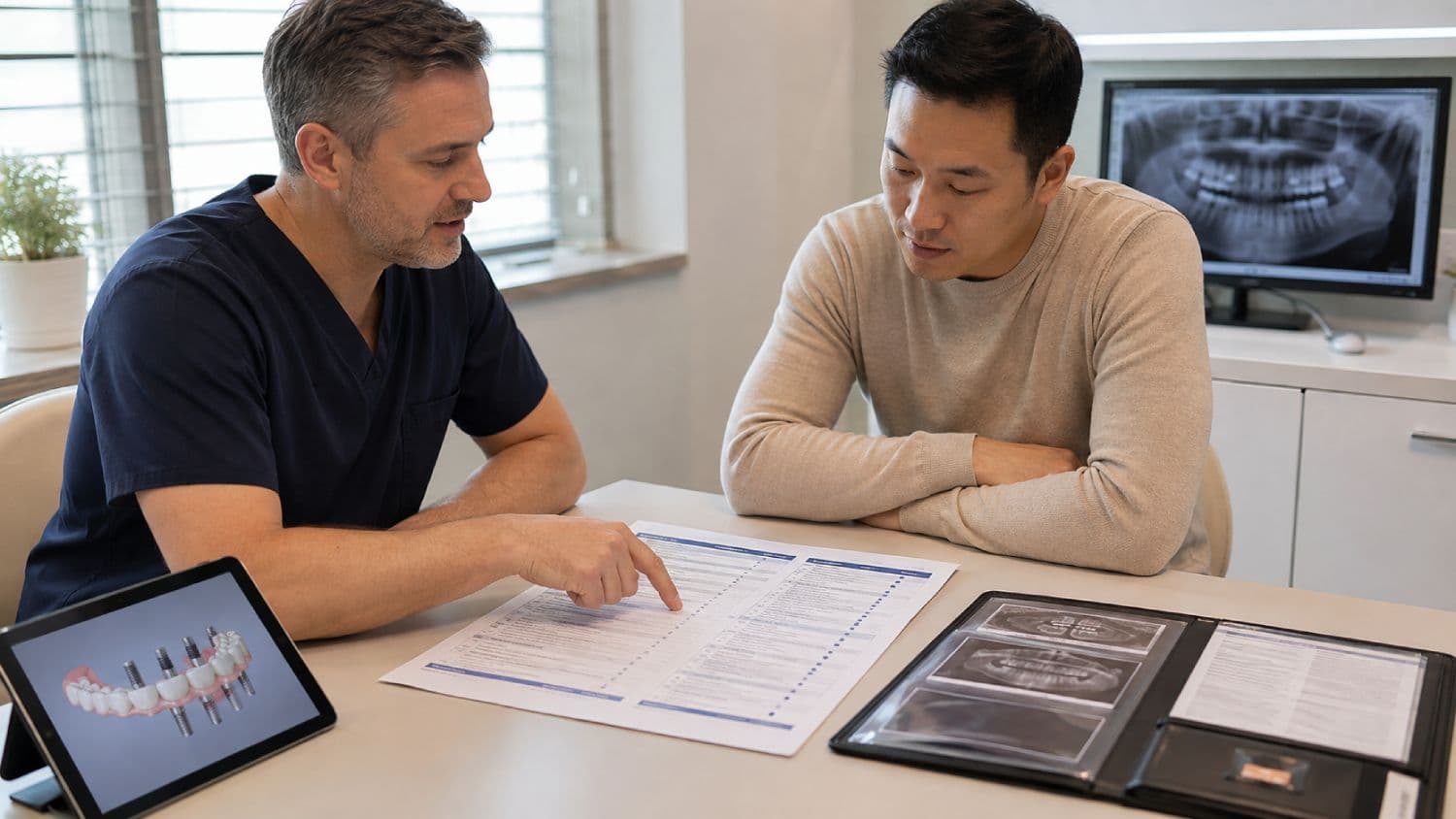
The implant-fixture subtotal is useful because it makes one part of the cost transparent. It should never be mistaken for the full price of a fixed full-arch rehabilitation.
How to Verify a Clinic and Treatment Plan in Turkey
International patients should verify both the provider and the rationale for the treatment.
Before booking:
- Identify the responsible dentist. Know who will perform the examination, surgery, and prosthetic treatment.
- Check the facility’s legal identity and authorization. The Republic of Türkiye Ministry of Health publishes current lists of healthcare providers authorized for international health tourism. Authorization is an administrative verification step, not a guarantee of an individual outcome.
- Ask why six implants are recommended. The explanation should refer to your anatomy and prosthetic plan, not simply “more is better.”
- Confirm implant traceability. Ask for the brand and model and keep that information after treatment. The FDA also recommends keeping implant brand and model information in the patient record.
- Review the complete quotation. Compare the same components between clinics.
- Clarify temporary and final teeth. Ask which restoration you will leave with after surgery and what criteria must be met for immediate fixed loading.
- Ask about complications and remedial care. Know who pays for local assessment, repair, replacement, travel or repeat treatment.
- Review maintenance requirements. Long-term access for cleaning and professional follow-up should be part of the design.
Before-and-after photographs, technology, brand names and reviews may provide context, but none of them proves that a particular treatment is suitable for you.
Travel, Records and Aftercare After Returning Home
Dental tourism adds a continuity-of-care problem that does not disappear when the final bridge is fitted.
CDC medical-tourism guidance recommends understanding which services are included, arranging follow-up, and obtaining complete records before returning home. It also advises patients to seek prompt medical care if they suspect a complication rather than delaying treatment.
For implant treatment, your portable record set should ideally include:
- Diagnosis and treatment summary
- Implant brand, model, size, and positions
- Relevant X-rays or CBCT records
- Details of grafting or additional surgery
- Abutment and prosthesis information
- Final bridge material and design
- Medicines and postoperative instructions
- Maintenance schedule
- Clinic and treating-dentist contact information
Clarify in advance what happens if you develop pain, swelling, looseness, a fracture, or another problem after returning home. Urgent or worsening symptoms should be assessed locally rather than waiting for remote messaging or a future flight.
Recovery time should also be considered in medical planning. CDC guidance warns that combining procedures abroad with demanding vacation activities can interfere with postoperative recovery.
Planning an All-on-6 Consultation With Dr. Furkan Küçük Dental Clinic
For a preliminary review, useful information includes:
- Clear photographs of your teeth and smile
- Recent panoramic imaging or CBCT if already available
- A list of medical conditions
- Current medicines
- Smoking history
- Details of previous implants, bridges or dentures
- Previous dental reports when available
- Your main functional and aesthetic concerns
The clinic can use this information to discuss likely options and prepare a preliminary estimate. The definitive implant number, extraction decisions, loading protocol, additional procedures, final prosthesis and price should be confirmed after the necessary in-person examination and diagnostics.
Conclusion
All-on-6 can be an effective way to support a fixed full-arch restoration, but the value of the treatment does not come solely from the number six.
At Dr. Furkan Küçük Dental Clinic, six implant fixtures have a controlled base subtotal of 1,350 euros with Turkish implants, 1,800 euros with German implants, or 3,000 euros with Swiss implants for one jaw. Those figures are a transparent starting point, not a complete treatment quote.
The stronger decision process is to ask whether six implants are justified for your anatomy and prosthetic design, whether any teeth can be preserved, whether immediate loading is genuinely appropriate, exactly what the temporary and final prostheses include, and how maintenance and complications will be managed after you return home. Current consensus and comparative evidence support this individualized approach rather than a blanket “six is better than four” claim.
A good All-on-6 plan should be explainable tooth by tooth, component by component, and stage by stage.
Frequently Asked Questions
References
- ITI: Number of Implants Placed for Complete-Arch Fixed Prostheses
- ITI: Loading Protocols for Fixed Prostheses in Edentulous Jaws
- PubMed: All-on-4 and All-on-6 implant-supported fixed prostheses systematic review and meta-analysis
- FDA: Dental Implants - What You Should Know
- CDC Yellow Book 2026: Medical Tourism
- Republic of Türkiye Ministry of Health: Healthcare Providers Authorized by the Ministry