Dental Implants in Turkey: Patient-First Planning Guide
Medically reviewed by Dr. Furkan Küçük · Last reviewed:
Dental Implants in Turkey: A Patient-First Planning Guide
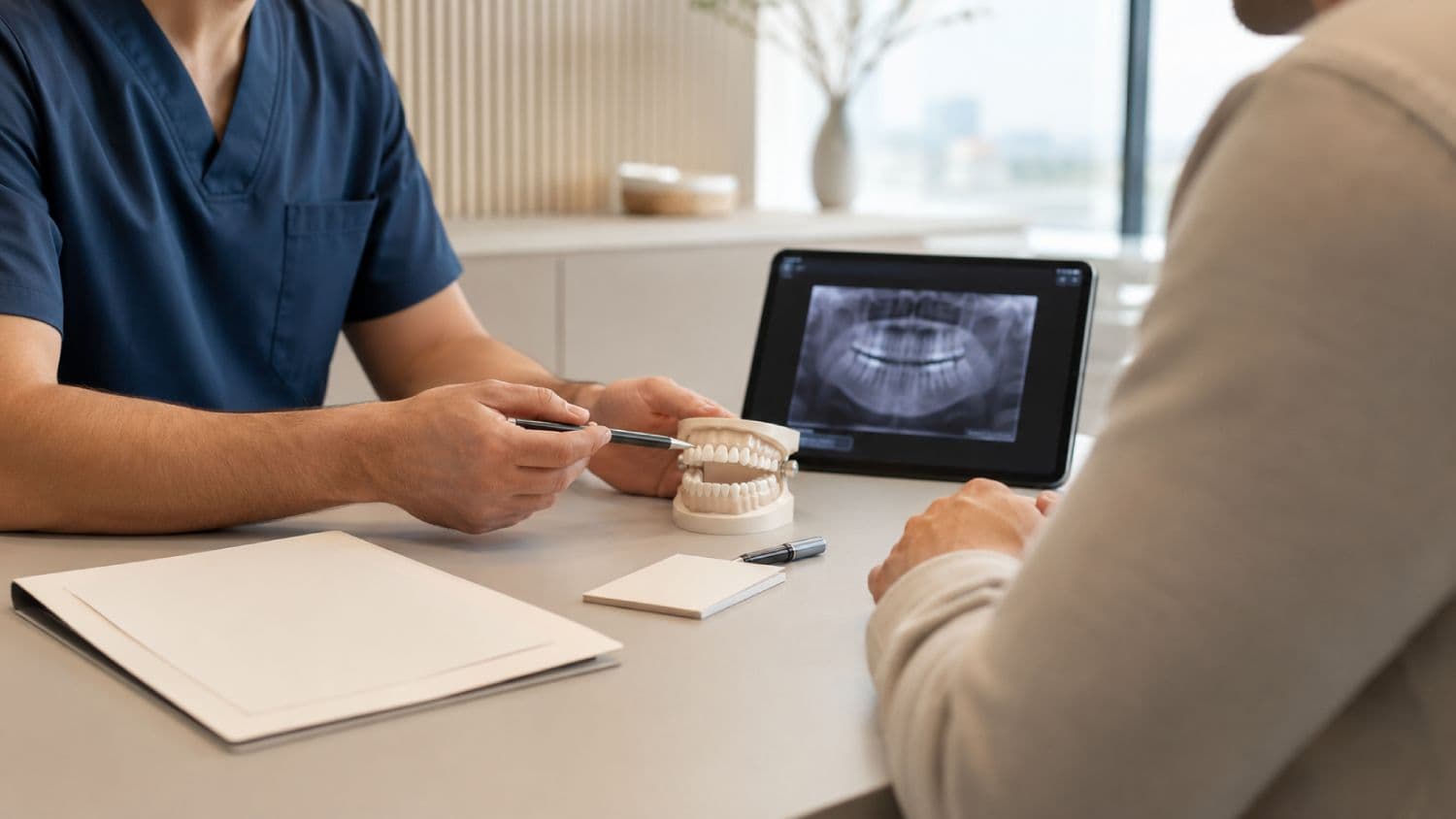
Dental implants can replace one missing tooth, support a bridge, improve the stability of a removable denture, or support a fixed full-arch restoration. For some patients, traveling to Turkey may offer access to care, convenient transport links, or a different overall cost. Those practical factors matter, but they should come after the clinical questions.
Implant treatment combines surgery, restorative dentistry, healing, and long-term maintenance. It is not a standard package that suits every mouth. Before comparing destinations or paying a deposit, you need to understand why each tooth is missing or failing, whether disease is controlled, which alternatives are reasonable, what treatment stages are proposed, and who will manage follow-up when you return home.
This guide explains the decisions behind dental implant treatment in Turkey. It cannot confirm whether implants are suitable for you. That requires an examination, your medical and dental history, and any clinically necessary imaging.
What Is a Dental Implant?
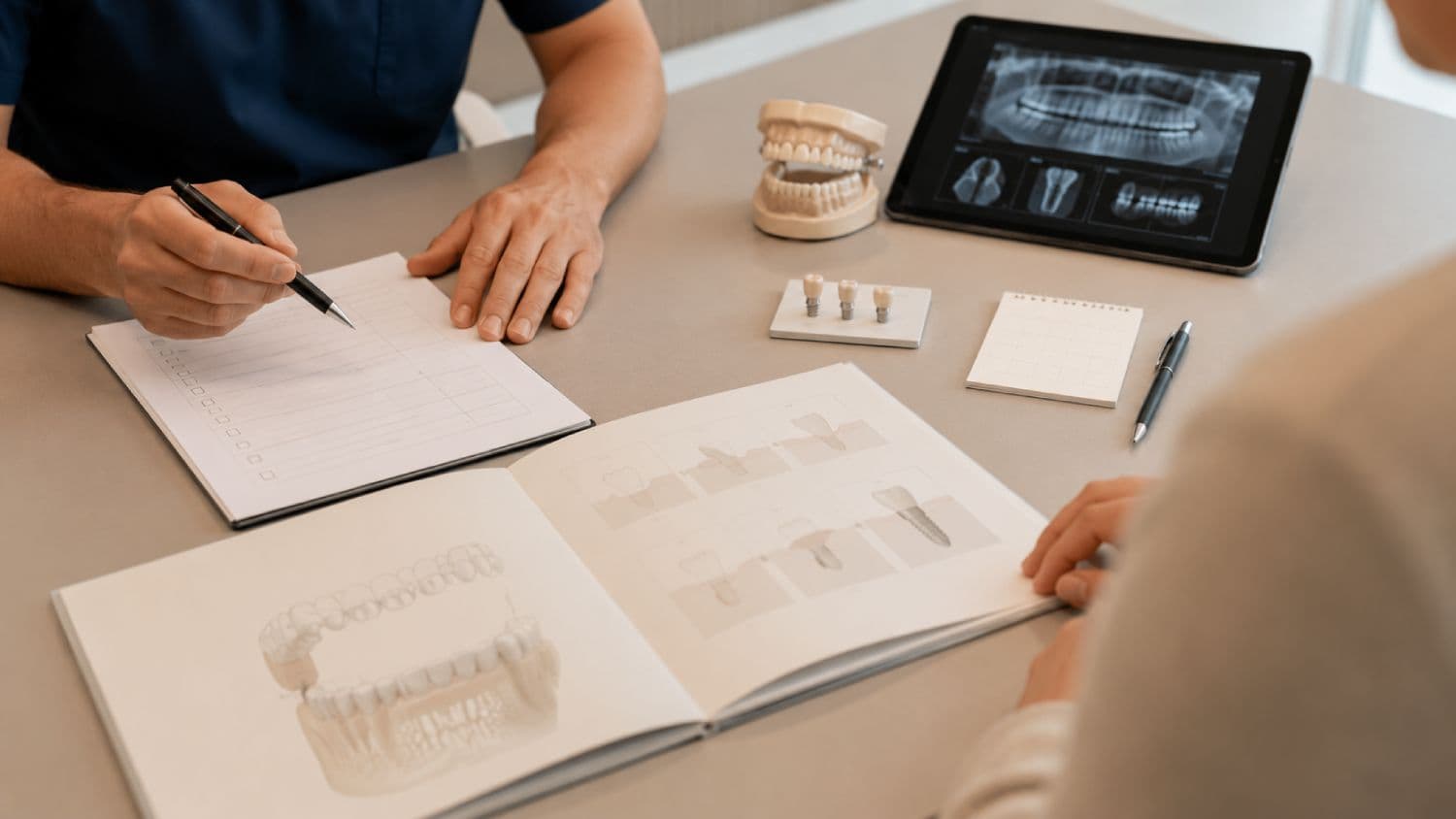
A dental implant refers to a device surgically inserted into the jawbone to provide support for one or more replacement teeth. Treatment typically consists of three interconnected components.
The implant body is placed in the bone. The abutment serves as the link between the implant and the final restoration. The restoration may be a crown, bridge, removable overdenture, or fixed full-arch bridge.
The visible replacement tooth is not the implant itself. This distinction matters because the implant, connection, screws, and restoration can have different maintenance and repair needs. A crown or bridge may wear, chip, loosen, or need replacement even when the implant remains integrated.
Ask which implant system and components are planned. Keep the brand, model, dimensions, and component or lot information when available. These records can help another dentist identify compatible parts if maintenance or repair is needed later.
Start With Diagnosis, Not a Package
A safe implant plan begins with a diagnosis. The dentist should assess the whole mouth rather than looking only at the gap or the teeth you want replaced.
A thorough assessment may include why each tooth is missing, loose, painful, or considered for extraction; active decay, infection, gum disease, and plaque control; the prognosis of the remaining teeth and whether any can be preserved; the bite, clenching or grinding, available restorative space, and jaw relationships; bone volume and nearby anatomical structures, including nerves and sinuses; your medical history, smoking or nicotine use, diabetes control, medicines, allergies, and previous operations; existing crowns, bridges, dentures, implants, radiographs, and scans; and your priorities for function, appearance, treatment time, removability, and maintenance.
Photographs and an online discussion can help a clinic understand your concerns and prepare preliminary options. They cannot reliably confirm bone anatomy, periodontal health, bite forces, the condition of tooth roots, or the final surgical and restorative design. A remote estimate may therefore change after examination and imaging.
A changed plan is not automatically a warning sign if new clinical information justifies it. The clinic should explain what has changed, why it matters, what alternatives remain, and how the change affects cost and timing before treatment begins.
Who May Need Preparation Before Implant Treatment?
Implants are not automatically suitable simply because a tooth is missing. Some factors may need treatment, stabilization, or further assessment first.
These factors include untreated decay, infection, or periodontal disease; bleeding or swollen gums and poor plaque control; smoking or nicotine exposure; uncontrolled or unstable medical conditions; medicines or previous treatment that may affect surgery or healing; insufficient bone or difficult nerve and sinus anatomy; heavy bite forces, clenching, grinding, or limited space for the restoration; an inability to clean the planned restoration or attend long-term maintenance; and expectations that cannot be met predictably.
These factors do not all mean that implant treatment is impossible. They may change the risks, sequence, design, or timing. The decision should be individual. Age alone is not enough to determine suitability. General health, oral health, anatomy, growth status where relevant, and the ability to maintain the result are more important.
Alternatives to Dental Implants
Informed decision-making includes reasonable alternatives and the option of no treatment.
Depending on the tooth, the mouth, and your priorities, alternatives may include preserving and restoring a tooth when this remains clinically appropriate; accepting the space if it does not cause an important functional or appearance problem; a resin-bonded bridge that attaches to a neighboring tooth with limited preparation; a conventional bridge supported by prepared neighboring teeth; a removable partial or complete denture; or monitoring without replacement.
Each option has advantages, limitations, maintenance needs, and possible effects on other teeth. In some cases, an implant avoids preparing adjacent teeth, but it introduces surgery, healing, device components, and long-term implant-specific care. The best choice is not always the most complex or the most expensive one. The broader dental treatment in Turkey guide explains how different treatment categories should be compared.
Which Implant-Supported Option Is Being Proposed?
The phrase “dental implants” can describe very different treatments. Ask the dentist to name the proposed restoration, not only the number of implants.
Single-Tooth Implant
A single implant may support one crown in a suitable gap. The plan must consider the available bone, gum shape, neighboring tooth roots, bite, and space for a natural-looking crown. In visible areas, tissue shape and aesthetic expectations may make treatment more complex.
Implant-Supported Bridge
Two or more implants may support a bridge replacing several teeth. The number and position of implants depend on the length of the space, anatomy, bite forces, and the design of the bridge. One implant is not necessarily required for every missing tooth.
Implant Overdenture
An overdenture is removable but retained or supported by implants. It may improve stability compared with a conventional denture while remaining removable for cleaning. Ask how it attaches, how often the retaining parts may need maintenance, and whether you can manage the daily hygiene.
Fixed Full-Arch Restoration
A fixed full-arch bridge replaces all or most teeth in one jaw and is supported by several implants. It requires detailed decisions about whether teeth should be removed, implant position, available bone, restorative space, bite, provisional teeth, final material, hygiene access, and future repairs.
“Fixed” does not mean maintenance-free. The bridge and its components may require professional removal, cleaning, adjustment, repair, or replacement over time.
A gallery can show examples of previous implant treatment, but it cannot predict your healing, appearance, function, or longevity. Individual results may vary.
All-on-4 and All-on-6 Are Treatment Concepts, Not Universal Packages
All-on-4 and All-on-6 commonly describe fixed full-arch restorations supported by four or six implants. The names are useful shorthand, but they do not determine whether the treatment is appropriate.
More implants do not automatically make a plan better, and fewer implants do not automatically make it simpler. Suitability depends on the condition and prognosis of the remaining teeth, the amount and distribution of bone, nerve and sinus anatomy, implant positions and angles, bite forces and jaw relationships, the length and design of the bridge, access for cleaning, and the consequences if one implant does not integrate or later develops a problem.
A written plan should explain why the proposed number and position of implants are appropriate for your mouth. It should also explain whether the provisional and final restorations will be fixed or removable and what alternatives exist.
Bone Grafting, Sinus Augmentation, and Complex Implant Sites
An implant needs an appropriate volume of bone in a safe position. When bone is limited, the dentist may discuss grafting, sinus augmentation, alternative implant positions, a different restoration, or no implant treatment.
Bone grafting can be performed prior to placing an implant or at the same appointment, depending on the size and location of the defect and the proposed treatment. Sinus augmentation may be considered in parts of the upper jaw where the available bone is limited beneath the sinus.
These procedures can add separate risks, costs, healing, and treatment stages. They should not be described as minor additions without explanation.
Ask why the procedure is needed, what material is proposed, whether it will be performed before or with implant placement, what alternatives could avoid or reduce grafting, which complications are possible, and how the additional stage changes travel and follow-up.
Angled, zygomatic, and pterygoid implants may be considered in selected complex cases. They involve different anatomy and greater technical complexity and should not be presented as routine shortcuts.
Remote Consultation Versus the Final Treatment Plan
A remote consultation can be useful for gathering information and deciding whether an in-person assessment is worth arranging. It may include your medical and dental history, photographs, existing radiographs or scans, your goals, and a preliminary estimate.
The final plan should follow an in-person clinical assessment. Depending on the case, this may include examination of the teeth and soft tissues, periodontal assessment, clinically justified radiographs or three-dimensional imaging, a tooth-by-tooth prognosis, review of the bone and nearby anatomy, bite and restorative-space assessment, discussion of reasonable alternatives, a consent conversation with the treating dentist, and a final itemized treatment plan.
Paying a deposit for a preliminary estimate should not be treated as agreement to an unchanged plan. New findings may justify a different option. You should have time to consider material changes and ask questions before irreversible treatment.
Typical Stages of Dental Implant Treatment
Stage 1: Diagnosis and Disease Control
Decay, infection, gum disease, and hygiene problems may need attention first.
Stage 2: Preparatory Treatment
This may include extraction, periodontal care, grafting, or adjustment of the proposed restorative design.
Stage 3: Implant Placement
The implant is placed surgically, sometimes with grafting.
Stage 4: Healing and Review
The implant and tissues are monitored before the definitive restoration is loaded.
Stage 5: Restorative Records
Impressions or digital scans, bite records, and try-ins may be required.
Stage 6: Provisional or Definitive Restoration
A temporary or final crown, bridge, or denture is fitted.
Stage 7: Adjustment and Maintenance Planning
The bite, cleaning access, home care, professional review, and emergency arrangements are confirmed.
Some stages may be combined. Others need to be separated. Healing may take months or longer, and additional visits may be needed if the implant, gum tissue, bite, or restoration requires further attention. A clinic should explain the purpose of each visit rather than offering one timeline to every patient.
Immediate Implants and “Teeth in a Day”
Several different procedures are often grouped under same-day marketing.
Immediate implant placement means placing an implant at the time a tooth is removed.
Immediate loading means applying controlled function to an implant soon after placement.
Immediate provisional teeth means fitting a temporary restoration on the day of surgery or soon afterward.
These are not the same decision. Each depends on infection control, bone and soft tissue, implant stability, bite forces, restoration design, and the dentist’s judgment. A provisional restoration is not necessarily the final restoration and may require dietary or functional restrictions.
Some patients can receive a fixed provisional restoration quickly. Others may need a removable temporary option or a healing period without loading. No clinic should guarantee same-day fixed teeth before completing the necessary assessment.
How to Compare an Itemized Implant Plan and Quote
Headline prices are difficult to compare because two quotations may describe different diagnoses, implant numbers, surgical procedures, temporary teeth, materials, and follow-up.
A useful written plan should identify the diagnosis and prognosis for each tooth or area; which teeth are proposed for extraction and why; reasonable alternatives, including preserving teeth, a bridge, a denture, or no replacement; the number and proposed positions of implants; the implant system and component plan; any grafting, sinus procedure, membrane, or preparatory surgery; whether temporary teeth are fixed or removable; the final restoration type and material; laboratory stages, try-ins, and bite checks; imaging, anaesthesia or sedation where relevant, medicines, and reviews; the expected visits and the reason for each one; circumstances that could change the plan; what is included, excluded, conditional, refundable, or non-refundable; written warranty terms and exclusions; and who pays for maintenance, repair, local care, remedial treatment, and return travel.
A warranty is a contract, not a clinical guarantee. It may cover only specific parts or circumstances and may exclude travel, accommodation, maintenance, smoking, trauma, or treatment by another provider. Read it before paying.
Your total care cost may include assessment, disease-control treatment, extraction, grafting, temporary teeth, definitive restorations, travel, accommodation, time away from work, local follow-up, professional maintenance, and future repair. Compare the whole plan rather than one implant price. The implant cost calculator guide and dentist prices in Turkey guide provide additional budgeting context.
The calculator below can support early budgeting for available treatment and accommodation items. It cannot diagnose your condition or replace the final itemized plan after examination.
What Records Should You Request?
Before returning home, ask for copies of records that support continuity of care.
These should include the final treatment plan, consent documentation, radiographs and scans in a usable format, clinical photographs where available, surgical and restorative notes, implant brand and model information, implant dimensions and component or lot information when available, graft and biomaterial records where relevant, laboratory and restoration information, prescriptions and postoperative instructions, the maintenance schedule, clinic contact details, and the process for urgent concerns.
Keep these records and share them with any dentist who later assesses the implants. Records make follow-up easier, but they do not replace a new clinical examination.
Travel and Aftercare Planning
Cross-border treatment requires a plan for care on both sides of the journey.
Before traveling, consider arranging access to a dentist at home for urgent review and long-term maintenance. Check what your insurance does and does not cover, and budget for care that may need to be paid for out of pocket.
Allow the clinical plan, rather than sightseeing or flight prices, to determine your schedule. Ask the treating dentist about case-specific restrictions after surgery, when the clinic expects reviews, and what findings or complications would require a return visit.
After treatment, follow the written instructions and seek prompt care for concerning symptoms. Tell any clinician you see about the dental procedure and your travel history.
Remote messages or video calls may help with initial triage, but they cannot provide examination, imaging, professional cleaning, bite adjustment, drainage, repair, or emergency treatment. The dental implant aftercare guide explains maintenance and warning signs in more detail.
Typical holiday activities may not be appropriate immediately after surgery. Ask your clinician about exercise, swimming, alcohol, smoking, diet, and travel based on the procedure you actually receive.
How to Verify a Provider in Turkey
Ask for the full name and role of every clinician involved. The dentist placing the implants and the clinician designing or fitting the restoration may be different people. Understand who is responsible for the diagnosis, surgery, provisional teeth, final restoration, and aftercare.
Ask for the treating dentist’s full name and relevant professional role. Confirm who will perform each stage and obtain the registered name and address of the facility.
Where applicable, check whether the facility appears on the current Ministry of Health international health-tourism authorization lists.
Confirm that a dentist, rather than only a coordinator, will discuss the diagnosis, alternatives, risks, and consent with you. Ask how the facility handles infection control, emergencies, complaints, records, and personal data.
You should also know who your named contact will be after treatment and what will happen if the plan changes or a complication occurs.
A Ministry authorization or other accreditation can be a useful starting point, but it does not prove that a particular treatment is suitable or guarantee an outcome. Marketing testimonials, technology, and a well-known implant brand should not replace independent verification and a clear clinical plan.
Risks and Long-Term Responsibilities
All surgery and implant treatment carry risks. Depending on the site and procedure, possible problems include infection or inflammation; failure of the implant to integrate or later loss of support; injury to nearby teeth, tissues, nerves, or sinus structures; altered sensation; pain, swelling, bleeding, or delayed healing; bite or function problems; gum recession or an appearance that does not meet expectations; difficulty cleaning around the implant or restoration; inflammation and bone loss around implants; loosening, wear, chipping, fracture, or replacement of screws, abutments, crowns, or bridges; and the need for further surgery or a different restoration.
Long-term care is part of the treatment. It may include daily cleaning around and beneath the restoration, professional monitoring and cleaning, management of gum disease and bite forces, and timely repair of worn or loose components.
Contact a dentist promptly if an implant or restoration feels mobile, painful, changes position, becomes difficult to clean, or is associated with persistent bleeding, swelling, discharge, numbness, or an altered bite. Do not rely on a warranty period as a substitute for maintenance.
Red Flags Before Paying a Deposit
Pause and ask for clarification when a clinic provides a final diagnosis or guaranteed result based only on photographs.
Other warning signs include pressure to extract many teeth without a tooth-by-tooth prognosis; no discussion of preserving teeth, bridges, dentures, or no treatment; a universal promise of fixed teeth on the day of surgery; a fixed success rate, lifetime claim, or painless-treatment promise; a brand name used as the only evidence of quality; no named treating dentist; no written implant positions, grafting plan, restoration design, or component details; no explanation of what happens if an implant cannot be placed or does not integrate; unclear responsibility for local follow-up, repair, complications, or return travel; and discounts, urgency, or holiday benefits used to rush consent.
A trustworthy plan should become clearer as questions are asked. It should not depend on pressure or vague reassurance.
Conclusion
Dental implants can provide useful fixed or removable tooth-replacement options for selected patients. The important comparison is not simply Turkey versus another country, or one headline price versus another. It is the comparison between diagnoses, alternatives, surgical and restorative plans, records, maintenance, and aftercare responsibilities.
Before traveling, make sure you understand which teeth can be preserved, which implant-supported option is proposed, what can change after examination, who will perform each stage, what records you will receive, and how urgent care and long-term maintenance will work at home.
A carefully staged plan may take longer than a package advertisement suggests, but clarity before treatment can reduce avoidable clinical, practical, and financial surprises.
After you understand the diagnosis and written plan, you can review the clinic’s current offers. Offers should never replace a case-specific clinical decision.
Frequently Asked Questions
References
- FDA: Dental Implants - What You Should Know
- Guy's and St Thomas' NHS Foundation Trust: Dental implants
- Cambridge University Hospitals: Dental implants in restorative dentistry
- Cambridge University Hospitals: Bone grafting for dental implants
- NHS: Dental treatments
- CDC Yellow Book 2026: Medical Tourism
- CDC Travelers' Health: Medical Tourism
- Republic of Türkiye Ministry of Health: Authorized Healthcare Providers
- Republic of Türkiye Ministry of Health: International Health Tourism Regulation
- American Dental Association: Patient autonomy
- American Dental Association: Types of consent
- American Dental Association: Documentation and patient records
- GOV.UK: Turkey travel advice - health
- GOV.UK: Choosing and paying for dental care