Dental Aesthetics in Istanbul: Patient-First Treatment Guide
Medically reviewed by Dr. Furkan Küçük · Last reviewed:
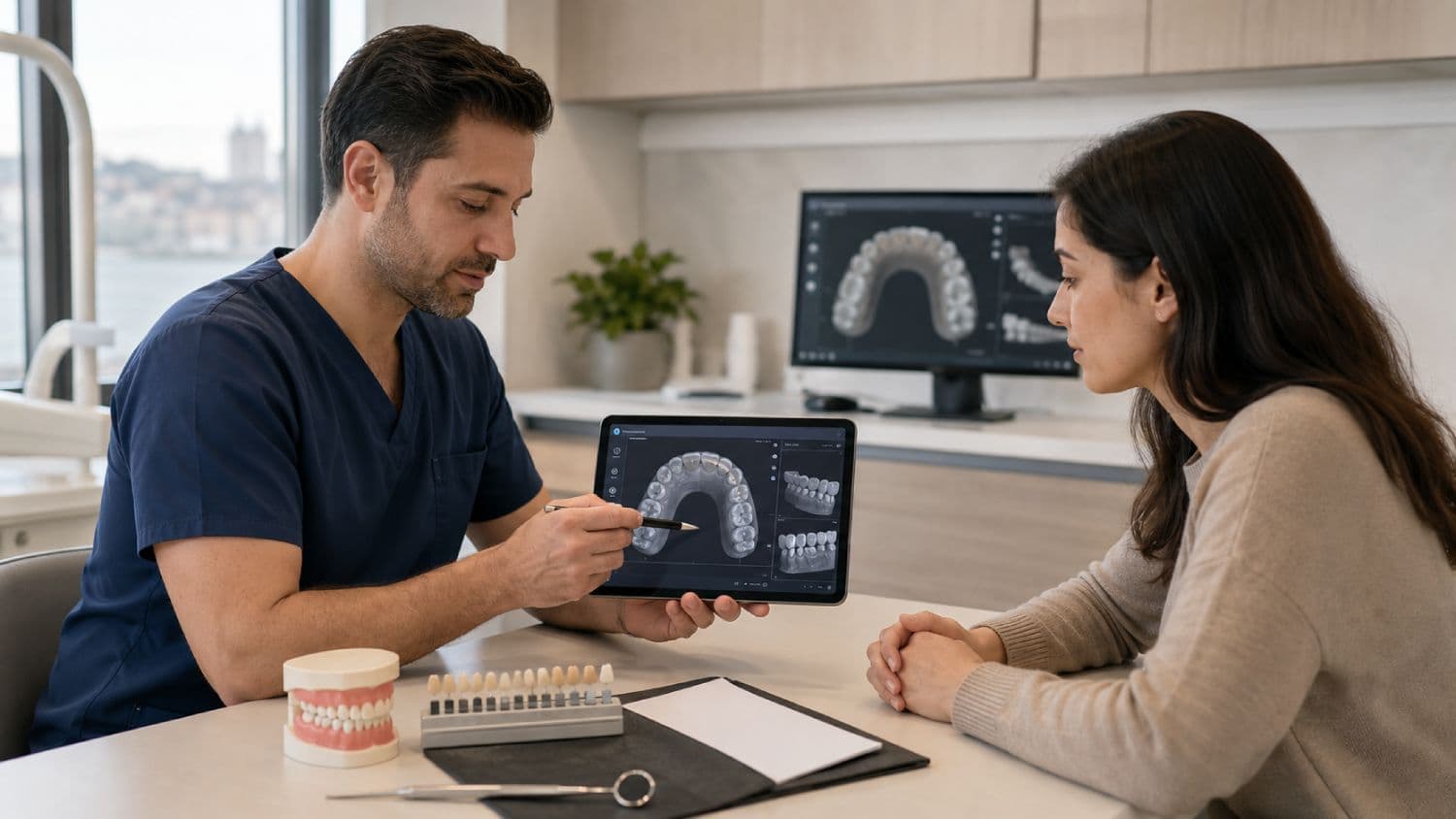
Dental Aesthetics in Istanbul: A Patient-First Treatment Guide
Improving your smile can be exciting, but it can also feel difficult to judge what is genuinely suitable. You may be comparing whitening, bonding, veneers, crowns, aligners, gum treatment, or a complete smile makeover. At the same time, you may be worried about teeth being prepared unnecessarily, results looking too white, or what would happen if you had a problem after returning home.
Dental aesthetics in Istanbul should not begin with a package or a fixed number of teeth. It should begin with a diagnosis. The aim is to understand what is causing the concern, check the health and function of your mouth, and then choose the least invasive option that can reasonably meet your goals.
That principle matters whether you want a subtle change or a more noticeable transformation. A natural-looking result depends on more than color. Tooth proportions, alignment, gum levels, facial features, speech, bite, existing dental work, and long-term maintenance all influence the final plan.
This guide explains the main aesthetic dental treatments, how they differ, what should be checked before treatment, and how to make a more informed decision when traveling to Istanbul.
What Does Dental Aesthetics Mean?
Dental aesthetics is the part of cosmetic dentistry in Istanbul concerned with how the teeth, gums, and smile look. It may involve improving tooth color, shape, position, symmetry, or the way visible dental work blends with natural teeth.
It can include:
- Professional teeth whitening
- Composite bonding
- Porcelain or composite veneers
- Dental crowns
- Orthodontic treatment with braces or aligners
- Treatment of uneven gum levels
- Replacement of missing teeth with bridges, implants, or other restorative options
- A planned combination of treatments
The word “aesthetic” does not mean that the treatment is clinically unimportant. Whitening products can affect sensitivity. Veneers may require enamel removal. Crowns cover the whole tooth and usually involve more preparation. Orthodontics changes tooth position and bite. Gum treatment and tooth replacement may involve biological healing that cannot be rushed.
Aesthetic care therefore has to protect three things at the same time:
- Oral health: decay, gum disease, infection, and other active problems should not be hidden beneath cosmetic work.
- Function: the teeth must meet comfortably enough for eating, speaking, and daily use.
- Appearance: color, shape, proportion, texture, and symmetry should match the patient’s goals and facial features.
A smile makeover in Istanbul is one possible form of dental aesthetics, but not everyone needs a makeover. Some people may benefit from one focused treatment, such as whitening or repairing a chipped edge. Others may need a staged plan that combines health treatment, alignment, whitening, and restorations.
The Checks That Should Come Before Cosmetic Treatment
Before deciding on materials or tooth shapes, a dentist needs to understand the condition of the teeth, gums, bite, and existing dental work. Photographs can be useful for an initial conversation, but they cannot show everything needed for a final diagnosis.
Teeth and gums
Aesthetic treatment should be planned on a healthy foundation. An examination may identify concerns such as:
- Tooth decay
- Cracks or weakened areas
- Old fillings or crowns that are failing
- Bleeding or inflamed gums
- Gum recession
- Tooth sensitivity
- Infection or pain
- Poor oral hygiene around planned treatment areas
Placing a veneer over a tooth with active decay does not solve the disease. Starting orthodontics when gum health and cleaning are poor may increase risk. Whitening unhealthy or very sensitive teeth may not be appropriate until the cause has been assessed.
This does not mean that every patient needs extensive preliminary treatment. It means the sequence should be based on findings rather than assumptions.
Bite, clenching, and grinding
The alignment between the upper and lower teeth can impact both comfort and longevity. Clenching or grinding may contribute to:
- Worn or shortened tooth edges
- Small fractures or chips
- Repeated bonding failures
- Damage to veneers or crowns
- Jaw muscle discomfort
- A feeling that some teeth meet before others
Aesthetic work that looks good when the mouth is open still has to function when the teeth meet. If heavy forces are present, the dentist may need to discuss material choice, tooth position, bite adjustment, or protective measures. A night guard may be recommended in selected cases, but it should be prescribed for a specific reason rather than treated as a universal solution.
Existing fillings, crowns, veneers, and implants
Natural teeth and dental restorations do not always change color in the same way. Whitening can lighten natural tooth structure, but it does not simply whiten existing crowns, veneers, implants, or tooth-coloured fillings to match.
For that reason, the order of treatment can matter. If natural teeth are going to be whitened and visible restorations are going to be replaced, whitening may be considered first so the final shade can be selected afterward. The dentist also needs to check whether old restorations are healthy, well fitted, and still appropriate.
Your expectations
“Natural” and “perfect” mean different things to different people. One patient may want a brighter but still individual smile. Another may prefer a very uniform result. It is helpful to discuss:
- How bright you want the teeth to look
- Whether you want to keep small natural variations
- Which features bother you most
- Which changes you do not want
- How much tooth preparation you would accept
- Whether you are prepared for maintenance or future replacement
- How treatment may affect speech, bite, or sensitivity
A preview, mock-up, or digital design can improve communication. Still, it is not a guarantee that biology, color, and final materials will behave exactly like an image on a screen.
Which Treatment May Fit Your Main Concern?
The correct option depends on an examination, but the following guide can help you understand the usual starting points.
| Main concern | Options that may be discussed | Important limitation |
|---|---|---|
| Teeth mainly look yellow or stained | Professional whitening | Does not change the colour of crowns, veneers, implants, or fillings in the same way |
| Small chips, uneven edges, or selected minor gaps | Composite bonding | May stain, wear, or chip and may need maintenance |
| Persistent colour or shape concerns on suitable front teeth | Veneers | May require enamel removal and can be irreversible |
| A tooth is heavily filled, fractured, weak, or structurally compromised | Crown | Covers the whole tooth and usually requires more preparation than a veneer |
| Crooked, crowded, protruding teeth, or a bite concern | Orthodontics | Takes time and requires retention and good oral hygiene |
| Uneven gum levels or excessive gum display | Gum or periodontal assessment | The cause may involve gum, tooth, lip, or bone relationships |
| Missing teeth | Implant, bridge, or another restorative option | Often requires broader functional and biological planning |
The table is not a diagnosis. It is a reminder that different problems need different tools. Choosing crowns for a color concern or veneers for a position problem may expose healthy tooth structure to unnecessary treatment when a more conservative alternative could work.
Teeth Whitening: Best When Color Is the Main Problem
Professional whitening is often the least invasive starting point when the main concern is the color of natural teeth. It can be carried out in a dental practice or through a dentist-supervised home system, depending on the patient and the product being used.
Whitening may be considered for staining or darkening related to age, diet, smoking, or other causes. However, not every type of discoloration responds in the same way. The dentist should first check whether the color change is caused by surface staining, previous trauma, medication, decay, or another dental problem.
Important points include:
- An evaluation of teeth and gums is recommended prior to whitening treatment.
- Temporary sensitivity or gum irritation can occur.
- Existing crowns, veneers, implants, and fillings may not lighten with the natural teeth.
- Whitening is not permanent and may need maintenance.
- Very dark, grey, or internally discolored teeth may respond differently.
- Whitening should not be used to hide disease or replace a necessary diagnosis.
When new visible restorations are also planned, the sequence should be discussed carefully. Whitening first may help establish the shade of the natural teeth before a crown, veneer, or filling is made to match.
Composite Bonding: Conservative for Selected Shape Changes
Composite bonding uses a tooth-coloured resin that is applied, shaped, hardened, and polished directly on the tooth. It can be useful for selected concerns such as:
- Small chips
- Worn or uneven edges
- Minor shape differences
- Selected small spaces
- Localized color or surface defects
One of bonding’s main advantages is that it can often be carried out with limited tooth preparation in appropriate cases. The material can also be repaired or adjusted more easily than some ceramic restorations.
The trade-offs are important. Composite may:
- Pick up stains over time.
- Lose some polish or surface texture.
- Chip under heavy forces
- Need repair or replacement.
- Be unsuitable for large changes or unstable bites.
Bonding is not automatically the conservative answer to every cosmetic concern. Closing a large space with resin may make teeth look too wide. Covering significantly crooked teeth may create bulky contours. Repeated chipping may indicate a bite or grinding problem that needs attention.
A good plan considers whether bonding, orthodontics, whitening, or a combination will solve the concern with the least biological cost.
Veneers: Front-Surface Coverage With Irreversible Trade-Offs
A veneer is a custom-made covering placed over the front surface of a tooth. Veneers may be made from porcelain or composite material and can be used to change visible color, shape, length, or symmetry in selected cases.
They are different from crowns because a veneer mainly covers the front of the tooth, while a crown covers the tooth more completely.
Veneers may be discussed for concerns such as:
- Persistent discoloration that is not suitable for whitening alone
- Chipped or worn front teeth
- Irregular tooth shape
- Selected spaces or mild position concerns
- Aesthetic replacement of unsuitable existing veneers
Before choosing veneers, patients should understand several limitations.
Veneers may be irreversible.
Some enamel may need to be removed to create space, improve fit, and allow the veneer to blend naturally. Once tooth structure has been removed, the tooth will usually continue to need a restoration in the future. Marketing terms such as “no-prep” or “minimal-prep” do not guarantee that no preparation will be needed in an individual case.
Health problems should be treated first.
Decay, gum disease, and poor hygiene should not be covered by veneers. Inflamed gums can make margins difficult to manage and may change the way the result looks as healing occurs.
Bite and habits affect risk.
Veneers may chip, crack, loosen, or wear. Clenching, grinding, a deep bite, or heavy contacts can affect suitability and maintenance. These factors do not always rule out treatment, but they need to be discussed honestly.
Veneers are not permanent.
Even well-made restorations may eventually need repair, re-bonding, or replacement. The future condition of the tooth, gums, bite, and restoration should be part of the decision before treatment begins.
Crowns: Full Coverage for Teeth That Need Structural Support
A dental crown encases the portion of the tooth that is visible above the gum line. It can restore shape, strength, and appearance when a tooth is weakened, heavily restored, fractured, or otherwise unsuitable for a more limited restoration.
A crown may be considered when:
- A large filling leaves too little healthy tooth structure
- A tooth is cracked or broken.
- A root-canal-treated tooth needs protection.
- Severe wear has reduced tooth structure.
- An implant needs a final visible restoration.
- An existing crown needs replacement.
Crowns can also improve color and shape, but they should not be presented as the automatic cosmetic option for healthy teeth. Because a crown surrounds the tooth, it usually requires more tooth reduction than a veneer.
This distinction is especially important when comparing treatment plans. Patients should ask whether each proposed restoration is a veneer or a crown, why it is needed, and how much tooth structure is expected to be removed. A package described informally as “veneers” may contain crowns, and the biological difference matters. The Turkey teeth guide explains why patients should confirm the restoration type before tooth preparation.
The best option depends on the condition of each tooth. A heavily restored tooth may benefit from crown coverage, while a healthy tooth with a minor color concern may have more conservative alternatives.
Orthodontics: Changing Position Instead of Covering It
When the main concern is tooth position, orthodontic treatment may address the cause rather than covering it. Braces or clear aligners can move teeth, improve spacing or crowding, and, in some cases, improve how the upper and lower teeth meet.
Orthodontics can be especially valuable when teeth are healthy but appear crooked, protruding, rotated, or unevenly spaced. Moving a tooth into a better position may reduce or avoid the need to prepare it for a veneer or crown.
However, orthodontics is not an instant cosmetic treatment. It requires:
- A suitable diagnosis and treatment plan
- Healthy teeth and gums
- Consistent oral hygiene
- Regular monitoring
- Patient cooperation with appliances or aligners
- Retainers after active treatment
Some aesthetic plans combine orthodontics with whitening or conservative bonding. For example, alignment may first improve tooth position, after which small edge changes can be refined with bonding. This staged approach can sometimes preserve more natural tooth structure than trying to disguise position with restorations alone.
Gum Aesthetics and Missing Teeth
The teeth are only one part of a smile. Uneven gum levels, excessive gum display, recession, or missing teeth can also affect balance.
Uneven gums or a “gummy smile”
A high or uneven gum line can have several causes. The visible result may relate to tooth eruption, gum thickness, bone position, tooth wear, lip movement, or facial proportions. Because these causes require different approaches, gum reshaping should not be planned from appearance alone.
A periodontal assessment may be needed to determine whether treatment is appropriate and how much healing time is required. Removing gum tissue without respecting the underlying anatomy can lead to an unstable result or expose areas that were not intended to be visible.
Missing teeth
Replacing a missing tooth is both an aesthetic and a functional decision. Options may include an implant-supported restoration, a bridge, or another prosthetic solution. The choice depends on factors such as:
- Bone and gum condition
- The health of neighboring teeth
- Bite and available space
- Medical history
- Healing requirements
- Cleaning and maintenance
- The patient’s preferences and budget
Implant treatment can involve surgery, integration time, and staged restorative work. It should not be presented as a quick addition to a cosmetic package. A visible implant crown also depends on careful management of gum contours, tooth proportions, and the way the restoration emerges from the gum.
A Conservative-First Treatment Sequence
Aesthetic care is often safer and easier to understand when it follows a logical order. The exact sequence varies, but a conservative-first approach may look like this:
- Control active disease. Treat decay, infection, or gum inflammation and improve daily cleaning where necessary.
- Stabilize symptoms and function. Investigate pain, sensitivity, cracks, grinding, and bite concerns.
- Consider tooth movement. If position is the main problem, discuss orthodontics before covering healthy teeth.
- Plan colour. Whiten natural teeth when appropriate and allow the shade to settle before matching new visible restorations.
- Repair conservatively. Use additive or limited-preparation options, such as selected bonding, when they can meet the goal predictably.
- Use veneers or crowns selectively. Choose irreversible restorations only when their expected benefits justify the biological trade-offs.
- Agree on maintenance. Understand cleaning, review, repair, protective, and replacement needs before treatment begins.
This is not a universal protocol. It is a way to avoid starting with the most dramatic option before simpler or less invasive alternatives have been considered.
How Aesthetic Treatment Planning Usually Works
A reliable plan should explain not only what will be done, but why each step is recommended and what the alternatives are.
1. Initial information
Before travel, a clinic may request photographs, scans, X-rays, dental records, and details of your medical and dental history. This information can help identify questions and provide a preliminary discussion.
A remote opinion remains provisional. Photographs cannot reliably show decay between teeth, gum-pocket measurements, the full bite, the condition beneath existing restorations, or all the information required for consent.
2. In-person assessment
The final plan should follow an examination. Depending on the case, assessment may include:
- The condition of each tooth and restoration
- Gum health
- Tooth mobility and sensitivity
- Bite and jaw movements
- Photographs or digital scans
- X-rays or other imaging when clinically indicated
- Smile line, tooth display, and facial relationships
The findings may confirm the preliminary plan, simplify it, or show that a different sequence is safer.
3. Options and a written plan
A useful written plan should identify:
- Which tooth is receiving which treatment
- Why that treatment is recommended
- Reasonable alternatives, including no treatment
- Whether tooth preparation is expected
- The proposed material
- The number of appointments or trips
- Whether temporary restorations are required
- Important risks and limitations
- What is included and excluded from the quote
- The aftercare and complication arrangements
If the plan changes after examination, the reason and any change in cost should be explained before treatment continues.
4. Preview and consent
Digital dental design, a wax-up, or a temporary mock-up may help you and the dentist discuss shape and proportion. These tools can be valuable, particularly when several teeth are involved.
They should support consent rather than replace it. A preview cannot guarantee an exact result, and it does not remove the need to discuss sensitivity, preparation, gum response, bite, repair, maintenance, and future replacement.

Planning Dental Aesthetics in Istanbul as an International Patient
Traveling for dental care adds practical questions that local patients may not face. Flights and hotel bookings should follow the clinical plan; the treatment should not be compressed to fit a short holiday.
Before committing, ask the clinic:
- Who will examine me and who will perform each part of treatment?
- How can I verify the dentist’s professional registration and qualifications?
- Is the remote quote provisional until an in-person examination?
- Will I receive an itemized plan for each tooth?
- Are the proposed restorations veneers, crowns, onlays, bonding, or something else?
- How much tooth preparation is expected, and are there more conservative alternatives?
- How many appointments, laboratory stages, or separate trips may be needed?
- Will I have temporary restorations, and what should I do if one breaks?
- How long should I remain nearby after the final appointment?
- Who provides urgent advice outside normal hours?
- What happens if I develop pain, swelling, a high bite, chipping, or another problem after going home?
- What does any guarantee cover, exclude, or require?
- How are complaints handled?
- Who pays for extra travel or remedial treatment if a complication occurs?
- Which records will I receive to share with my dentist at home?
You should also check whether your travel or medical insurance covers planned dental treatment and related complications. Do not assume that a guarantee replaces insurance or provides the same legal protection you would have at home.
A short city break may be sufficient for a limited procedure, but complex restorative, surgical, or laboratory-based care can require more time or more than one trip. Only the treating team can estimate the schedule after assessing your case, and healing can vary.
What Affects the Cost of Dental Aesthetics in Istanbul?
There is no meaningful single price for “dental aesthetics” because the term covers very different treatments. A quote may be affected by:
- The examination, imaging, and diagnostic records required
- Treatment needed before cosmetic work
- The type and number of procedures
- The number of teeth involved
- Material and laboratory requirements
- Bite, gum, or alignment complexity.
- Temporary restorations
- Surgical or healing stages
- The number of appointments or trips
- Aftercare and maintenance arrangements
- Travel, accommodation, and time away from work
When comparing quotes, compare the clinical content rather than the package headline. Two plans with the same number of teeth may be biologically very different if one uses bonding or veneers and the other uses full crowns.
Ask for answers to these questions:
- Is each tooth and treatment named?
- Are preliminary treatments included?
- Are temporaries, laboratory fees, scans, and medications included?
- Could the plan or price change after examination?
- What aftercare is included when I return home?
- What future maintenance or replacement is likely?
The lowest initial quote may not be the lowest total cost if it excludes diagnostics, additional visits, repairs, or remedial care. After comparing the clinical plan, you can review the clinic’s current offers, but a discount should never determine whether treatment is suitable.
The calculator below provides a planning estimate for supported treatment and accommodation items. It cannot diagnose your condition, select a treatment, or replace an itemized quotation after examination.
Risks, Limitations, and Red Flags
Every treatment has limitations. The relevant risks depend on the procedure, the health of the tooth, the bite, the material, and how the work is maintained.
Possible problems may include:
- Temporary or persistent sensitivity
- Gum irritation or inflammation
- Chipping, wear, fracture, or debonding
- A restoration feeling high or uncomfortable in the bite
- Color or shape not matching expectations
- Difficulty cleaning bulky or poorly contoured areas
- The need for repair, replacement, or additional treatment
- Complications related to untreated disease or inadequate planning
Seek a clear explanation rather than reassurance alone. Warning signs during the decision process include:
- A final treatment plan offered only from photographs or messages.
- Pressure to treat many healthy teeth immediately
- No discussion of whitening, bonding, or orthodontics as alternatives
- Crowns described as veneers without explaining the difference
- Claims that treatment is permanent, risk-free, painless, or guaranteed to look a particular way
- No named treating dentist or verifiable professional details.
- No written plan, consent information, or itemized quote
- A schedule driven mainly by flights rather than clinical stages
- No clear aftercare, complaint, or complication pathway
- Reluctance to provide records after treatment
A trustworthy consultation should leave room to pause, ask questions, or seek a second opinion—especially before irreversible treatment.
How to Aim for a Natural-Looking Result
Natural-looking dental aesthetics is not simply a matter of selecting a less-white shade. It depends on how several features work together:
- Tooth width and length
- Edge position and smile line
- Surface texture
- Translucency and colour variation
- Gum symmetry
- Lip movement
- Facial proportions
- The relationship between neighboring teeth
- Speech and bite
Bring examples of smiles you like, but also explain what you dislike about them. It can be more useful to say “I want some natural variation” or “I do not want the teeth to look longer” than to request a celebrity’s smile.
Ask to review the proposed shape and shade when the treatment allows it. Temporary restorations or a mock-up may provide useful feedback about appearance, speech, and comfort before the final work is completed.
Remember that “natural” is subjective and no dentist can guarantee that another person will perceive a result in the same way. Clear communication and realistic expectations reduce the risk of disappointment.
The gallery can show examples of previous aesthetic treatment, but it cannot predict your appearance, comfort, function, or longevity. Individual results may vary.
Aftercare and Long-Term Maintenance
Aesthetic treatment is not maintenance-free. Protecting the result depends on the procedure and your oral health.
General priorities include:
- Brush effectively with a fluoride toothpaste unless advised otherwise.
- Clean between teeth using the method recommended for your restorations.
- Attend professional reviews and cleaning.
- Follow instructions about food, sensitivity, and temporary restorations.
- Refrain from opening packaging or biting hard objects with your teeth.
- Address clenching or grinding if it has been diagnosed.
- Wear a prescribed retainer or night guard as instructed.
- Limit habits that contribute to staining when appearance is a priority
- Keep copies of your treatment plan, X-rays, scans, material details, and invoices.
Do not wait for a routine appointment if you develop persistent pain, swelling, a restoration that feels loose, a sudden change in bite, or difficulty cleaning an area. Early assessment may prevent a smaller problem from becoming more difficult to manage.
Before leaving Istanbul, make sure you know who to contact, what symptoms require urgent attention, and which dentist will provide care once you are home. A local dentist may not be able to accept responsibility for another provider’s work, so aftercare arrangements should be discussed before treatment—not after a problem develops.
Use the contact page to request a case-specific discussion of your goals, conservative alternatives, travel timing, and aftercare.
Conclusion
Dental aesthetics in Istanbul can involve anything from whitening a healthy smile to rebuilding worn, damaged, or missing teeth. The most visible treatment is not automatically the most appropriate one, and the biggest package is not necessarily the best value.
A patient-first plan asks a more useful question: Which option addresses my concern while preserving oral health, function, and as much natural tooth structure as reasonably possible?
Look for a qualified assessment, clear alternatives, an itemized plan, realistic travel timing, informed consent, and written aftercare. Taking time to understand the trade-offs before treatment can help you choose a result that is not only attractive on the day it is completed, but also manageable in the years that follow.